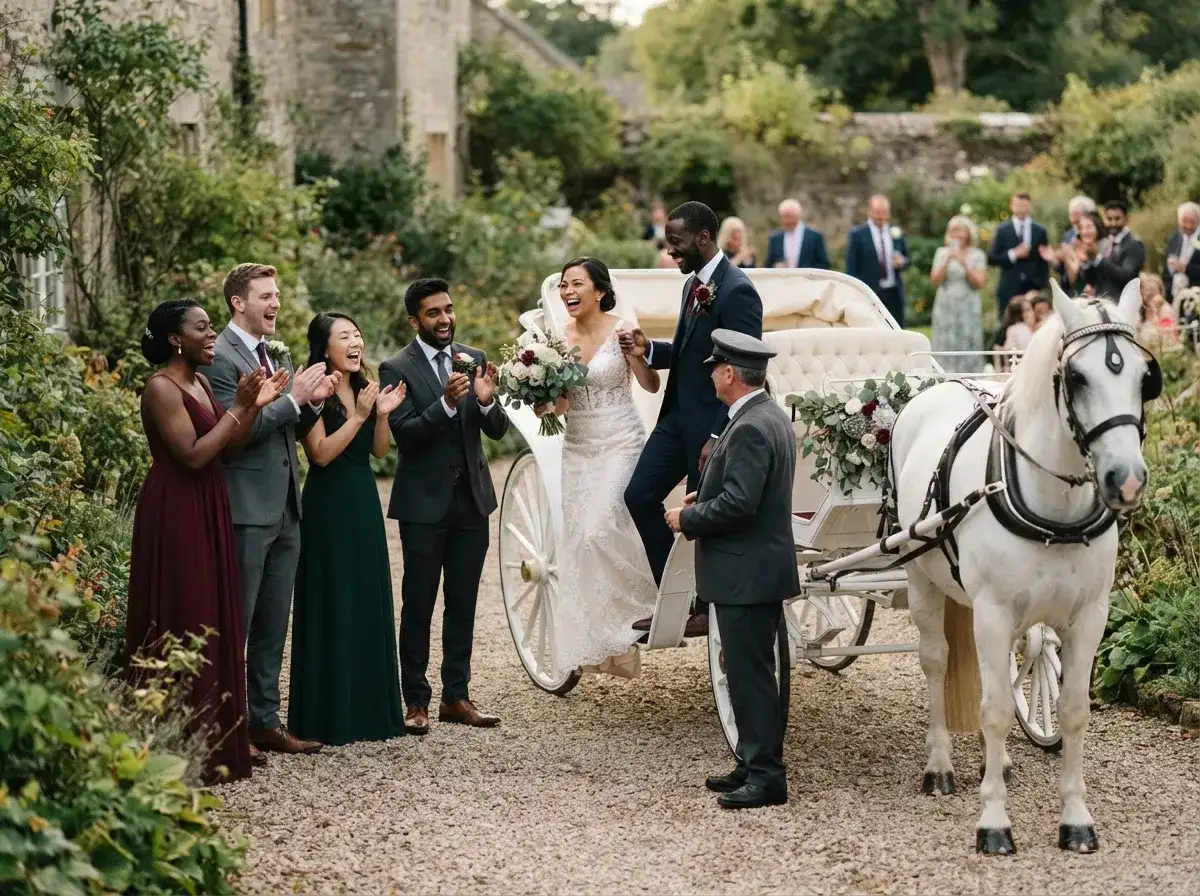
The photo-worthy wedding arrival ideas that work share three things: movement toward the camera, soft light, and a few unhurried seconds after you step down. A horse-drawn carriage, a gated reveal, golden-hour timing, intentional florals, and live music all build on those three. Pick one or two and give them room.
The first minutes of a wedding set the tone for the rest of it. A calm, planned arrival gives your photographer a story to tell: the setting, the approach, and then you at the center of it.
Here are the ideas couples in the Charlotte area, the Triangle, and the Sandhills keep coming back to, and how to make each one work.
What makes a wedding arrival photo-worthy?
Three things, and none of them is a bigger budget.
Movement. A carriage coming up a drive, a car turning through gates, or a couple walking a garden path gives the camera a sequence rather than a single frame. Still arrivals look staged. Moving ones look like life.
Light. Soft, low light flatters faces and fabric. Late afternoon and the hour before sunset are kind. Midday sun is harsh, so if the ceremony is at noon, plan the arrival photos in shade or under a covered entrance.
A pause. The step down, the first look at the venue, and a hand reaching back for your partner all happen in a few seconds. If those seconds are rushed, the photographer misses them. Build in a small window and tell everyone it exists.
Every idea below is a way of adding movement, light, or a pause. Choose the ones that fit your venue and skip the rest.
Which arrival ideas photograph well?
- Arrive by horse-drawn carriage. The approach, the step down, and the portrait afterward are three separate photo moments from one arrival. White Percheron horses and a classic vis-à-vis carriage suit gardens, estates, and churches with a drive. See wedding carriage entrance examples for how couples have staged it.
- Use the gates as the frame. Iron gates, stone pillars, or a tree-lined drive give the first shot a sense of place before you appear.
- Choose a vintage car with a clean silhouette. A polished black sedan for a ballroom, a cream convertible for the countryside. A short drive and a few minutes of portraits beside the car are enough.
- Plan a private first arrival. Arrive together before guests are seated, take a first look at the ceremony space, and save the public entrance for the doors.
- Let the wedding party lead. A short procession of attendants, a flower girl, or a ring bearer ahead of you adds layers without stealing focus.
- Time it for golden hour. The warm light in the hour before sunset cannot be recreated with decor.
- Use florals with intention. A garland on the carriage or a bouquet chosen to stand out against your transport frames you rather than hiding you.
- Add live music. A quartet, harpist, or guitarist turns guests toward you and gives the photos real reactions.
How do you time the arrival for the light?
Look up the sunset time for your actual date and venue, then work backward. The hour before sunset gives warm, soft light. The twenty minutes after gives a blue glow that suits candles and string lights.
If your ceremony is earlier in the day, use shade. A covered porch, a tree canopy, or the north side of a building softens the light without a filter.
For a carriage, allow extra time. A horse-drawn carriage moves at a walking pace and takes a slower, safer route than a car. The wedding carriage timeline planning guide shows how to place the ride in the day so the light and the schedule line up.
Tell your photographer, your planner, and the carriage team the same target time. One shared number keeps everyone in the right place when the carriage turns into the drive.
Which arrival suits your venue?
Let the property decide as much as the mood board does.
A carriage needs a safe route, level ground to stop, and room to turn or wait. Historic homes, gardens, parks, churches, and estates with a sweeping drive are natural fits. A downtown hotel with a tight loading zone may suit a vintage car for the drive and a carriage staged nearby for photos.
Ask the venue about access, turnaround space, gate widths, and any time limits. Then share the answers with your transport team. If the main entrance is not workable, a pickup or drop-off a short walk away still gives a striking approach.
Weather is part of the venue question. The AJ Carriage team watches the forecast and works with you to reschedule or adjust the route. Unsafe conditions pause the ride until they improve. Keep a covered photo spot in mind and the day stays calm.
How do you handle the dress and the step down?
The step down is often the single most photographed second of the arrival, so plan it like a moment rather than a chore.
Bustle a long train before boarding, or drape it over the seat beside you. Name one bridesmaid to manage the dress at the step and to fluff the skirt before the walk begins. The vis-à-vis carriage seats up to six passengers, so an attendant or a parent can ride along and be in place when the carriage stops.
Choose shoes you can step down in. Some brides board in flats and change into heels once they are on the ground and the photographer is ready.
The professionally uniformed driver holds the horses steady and offers a hand at the step. Take it, pause, look up at the venue, and let the camera work. Those two or three seconds are the picture.
Read about the horses and carriages to see the step height and seating before you plan the dress.
What should the photographer know ahead of time?
Photographers do their finest work when they know the plan. Share five things a week before the wedding.
Where the arrival begins and where it ends, with addresses. The exact target time and the sunset time. Who is riding and who is meeting the carriage. Where the carriage will stop for the step down and where it will wait for portraits. Whether you want the approach shot from the front or from the side.
Ask them to arrive early and scout the drive. A carriage cannot repeat an approach easily, so the first pass should be the one they are ready for.
For a second set of ideas on framing the ride itself, the wedding carriage vs vintage car comparison covers what each looks like on camera.
The most shared wedding photos are rarely the most choreographed. They are the ones where the joy is obvious: a parent’s face, guests turning as you appear, or a quiet second before the celebration begins. Choose an arrival that gives you that feeling, then give it room.
Wedding carriages are usually booked two to four weeks ahead, and spring and autumn Saturdays go sooner. If a carriage belongs in your arrival, check your date on the reservations page and the team will help with the rest.
Frequently asked questions
What kind of wedding arrival photographs well?
Arrivals that move toward the camera photograph well: a horse-drawn carriage coming up a drive, a car turning through iron gates, or a walk down a garden path. Add soft light and a few unhurried seconds after you step down, and the photographer has everything needed.
How do you photograph a horse-drawn carriage arrival?
Ask the photographer to stand ahead of the carriage's path for the approach, then move to the side for the step down. Plan a short pause once the carriage stops so nobody rushes. Afterward, use the carriage and the white horses as a portrait backdrop before guests gather.
Does a long train work with a carriage?
Yes, with a plan. Bustle the train before boarding or drape it over the seat, and name a bridesmaid to manage it at the step. The vis-à-vis carriage seats up to six, so an attendant can ride along. The driver holds the horses steady while you step down.
What if the venue cannot fit a carriage at the main entrance?
Stage the carriage a short walk away at a quiet corner, a park edge, or a side drive. The walk toward the venue becomes its own photo sequence. Share the venue address when you request a quote so the team can suggest a safe spot to stop and wait.