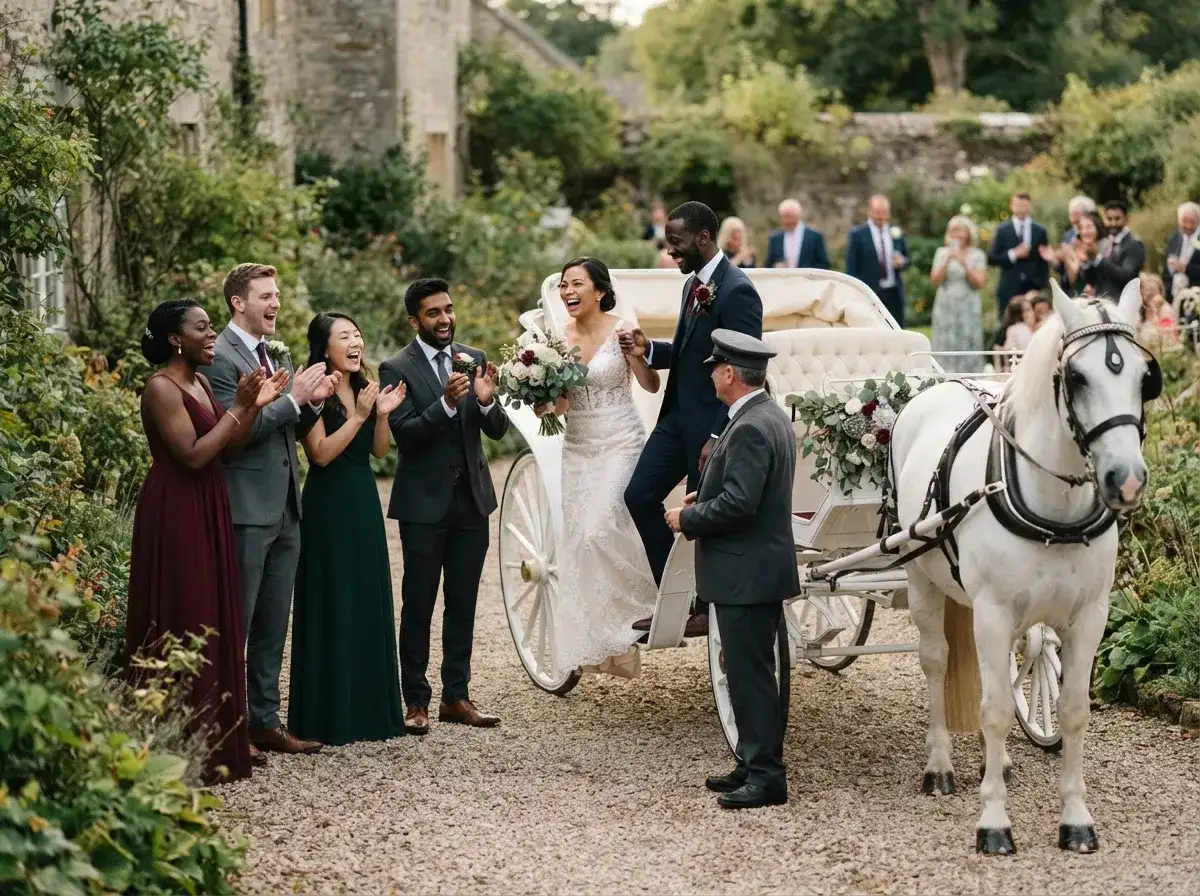
Here is how to plan a carriage sendoff in a few decisions. Pick a departure spot with room for guests and horses, place it in the timeline where the light is good, style the carriage to match your day, and brief the photographer. Keep a simple weather plan and leave a few spare minutes.
A sendoff is the last picture your guests take home. When it happens by carriage, the goodbye is slow, quiet, and visible to everyone. The horses step off, the couple waves, and the drive carries them out of sight.
Planning it is less work than a ceremony exit with sparklers, but it does need a few decisions made early. This guide covers where, when, how it looks, what the photographer needs, and how to keep the horses and guests comfortable.
Where should the carriage sendoff happen?
The departure spot decides how the sendoff looks and feels. Choose a place where the carriage can stand still, guests can line both sides, and the horses have a clear path forward.
A long drive is the classic choice. Guests gather along it, the couple boards at the top, and the carriage walks away between them. A church door with a paved forecourt works well too, as does a garden path that opens onto a lane.
Check the surface. Paved drives, firm gravel, and dry lawn are all fine. Soft mud, steep grades, and tight gates need a route adjustment, so mention them early. Ask the venue where vehicles usually depart, whether a carriage can use that spot, and whether there is room for the horses to turn. The horses and carriages page will help you picture the carriage in the space.
When in the day should you plan the sendoff?
There are two natural moments, and each has strengths. The first is right after the ceremony, when the couple rides away toward the reception. The second is at the end of the reception, as the true farewell.
The ceremony exit gives you daylight, a rested crowd, and a real journey to make. Guests are already gathered and the photographer is in position. If the reception is a short distance away, the ride becomes the transfer between the two.
The reception exit gives you a proper goodbye. Guests line up with the night behind them and the couple leaves for good. This version needs lighting along the drive so the carriage can be seen and photographed. It also needs a firm end time so the horses are not waiting late into the night. Whichever you choose, place it in the timeline first and let the rest of the schedule settle around it.
How do you style the carriage for a sendoff?
The carriage is a large white canvas, so a little styling goes a long way. Match it to the rest of your day rather than dressing it up separately.
Flowers should echo your bouquet. A garland along the back rail, a small arrangement at each rear corner, and ribbon in your accent color are usually enough. A simple sign on the back reading your new shared name or the wedding date reads well in photos as the carriage pulls away.
Keep everything secure and clear of the wheels and the horses. Nothing should dangle where it could catch or flap in the horses’ line of sight. Talk with the team about what attaches safely, and have your florist deliver the pieces before the driver stages the carriage so they can be fitted in good time.
What should guests do during a carriage sendoff?
Guests make the sendoff, so give them a simple job. Line them along both sides of the departure path, leaving a clear lane wide enough for the carriage with room to spare.
Hand out something gentle to wave or toss. Good choices include:
- Flower petals in a paper cone
- Bubbles in small bottles
- Ribbon wands
- Small hand bells or soft rattles
- Dried lavender or herbs
Avoid sparklers, confetti cannons, fireworks, air horns, and anything loud or bright near the horses. Ask your planner or a trusted friend to remind guests to stay behind the line and keep hands clear of the wheels. A calm crowd makes a calmer departure and better pictures.
What does the photographer need for the sendoff?
Give your photographer the departure spot, the direction the carriage will go, and the time, at least a week ahead. Those three details let them plan where to stand and when to move.
A short shot list keeps everyone aligned:
- The couple walking to the carriage through the guests
- Boarding, with the person helping with the dress
- A seated portrait in the carriage before it moves
- The first steps forward with guests waving on both sides
- The carriage from behind as it moves down the drive
- A wide shot from a distance as it disappears
Ask the photographer to stay out of the horses’ path and to avoid flash close to their faces. The driver will keep the horses still while portraits are taken, and a slow first few steps give the camera time to follow.
How do you keep the horses and guests comfortable?
The horses do the work of the sendoff, so their comfort shapes the moment. The team watches the forecast in the days before and will suggest a time shift if heat or a storm is likely. On the day, the horses need shade and water while they wait, so ask the venue about a spot near the departure point.
Keep noise down near the carriage. Music can continue at a distance, but sudden loud sounds right beside the horses should be avoided. Children love the horses, so appoint an adult to keep small hands and feet clear of the wheels.
If conditions become unsafe during the ride, the driver pauses in a safe place until they improve. That is part of responsible carriage operation, and a few spare minutes in your timeline make it a non-event.
What backup plan do you need?
Keep the backup plan small. Agree on a covered boarding spot, such as a porch or portico, for light rain. Agree on a shorter route if the timing runs late. Agree on who makes the call, usually your planner and the driver together.
Confirm the reservation details in the week before: date, time, departure spot, and the names of your planner and photographer. The reservation is final once the approval email arrives, and all purchases are final under the no refund policy. Weddings should be booked two to four weeks ahead at minimum, and the Charlotte wedding carriage and Raleigh wedding carriage pages describe how sendoffs usually run in those areas.
When the venue and timeline are set, check whether your date is open through the reservations page. The team will tell you what is possible for your farewell.
Frequently asked questions
When in the wedding should a carriage sendoff happen?
Most couples choose one of two moments: right after the ceremony, riding to the reception, or at the end of the reception as the final exit. The ceremony exit gives daylight and rested guests. The reception exit gives a true farewell.
What can guests throw or wave at a carriage sendoff?
Flower petals, bubbles, ribbon wands, and small bells are gentle choices that look lovely on camera. Avoid sparklers, confetti cannons, fireworks, and anything loud or bright near the horses, and ask guests to stay back from the wheels.
How long does a carriage sendoff take?
Plan about five minutes for guests to line up, two or three minutes for the couple to board and settle, and a slow departure of a few minutes down the drive. With portraits beside the carriage first, allow twenty minutes in the timeline.
What if it rains during the sendoff?
The team watches the forecast and works with you to shift the time or shorten the route. A covered porch or portico makes a good boarding spot in light rain. If conditions become unsafe, the driver pauses the ride until they improve.