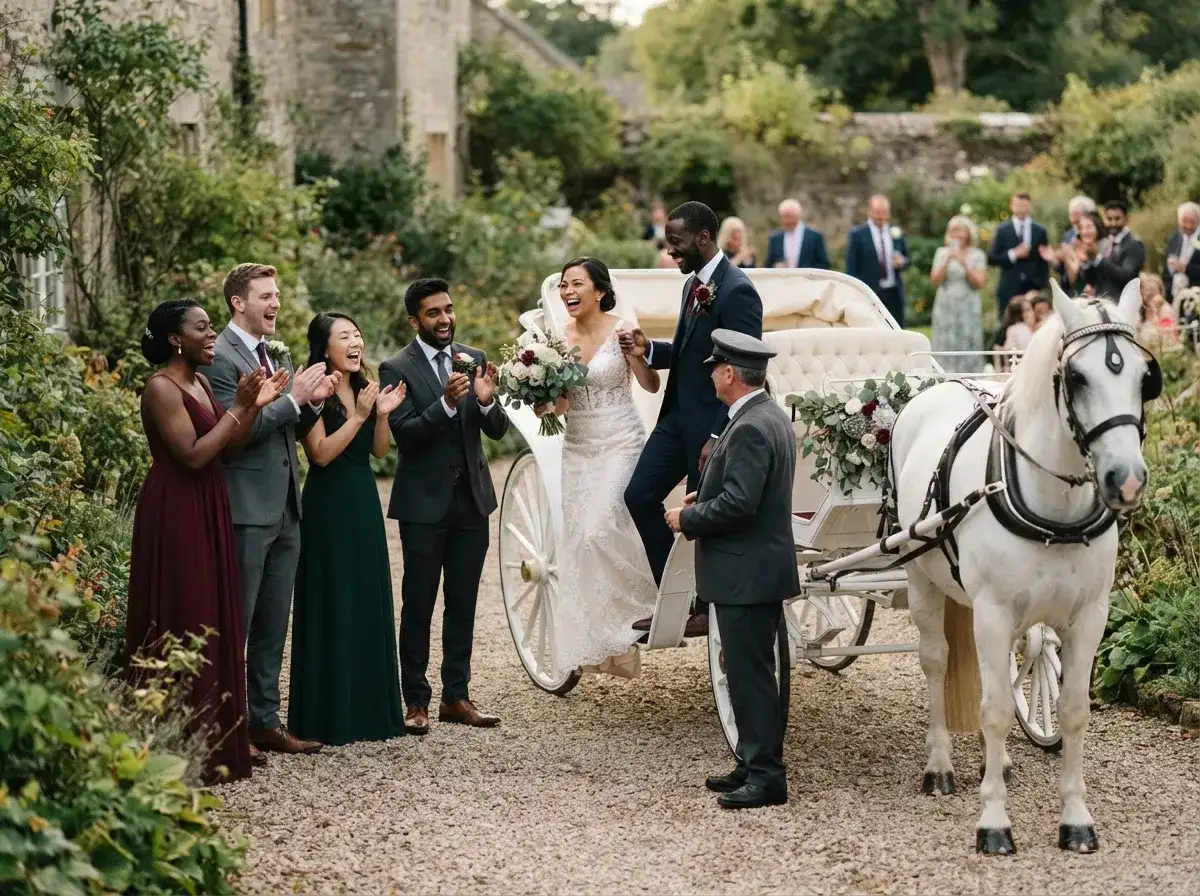
The current luxury wedding arrival trends favor experiences over flash. Couples are choosing horse-drawn carriages for classic romance, vintage cars for styled glamour, the grand exit as a second arrival, and quiet private moments before the vows. The common thread is an arrival that fits the venue and the couple's story, not the loudest option.
Some of the most remembered wedding photos happen before the ceremony begins. The approach, the first turn toward the guests, and the step down are moments guests feel and cameras catch.
Here is what couples are choosing now, why each option works, and how to pick the one that fits your day.
What are the luxury wedding arrival trends right now?
The strongest arrivals are chosen for meaning, not volume. Couples want an entrance that matches the venue, the attire, and the feeling they want guests to carry into the ceremony.
| Trend | The feeling | Where it shines |
|---|---|---|
| Horse-drawn carriage | Timeless, unhurried romance | Estates, gardens, churches, long drives |
| Vintage car | Styled, cinematic glamour | Ballrooms, city venues, fashion-led weddings |
| Grand exit as second arrival | Celebration and release | Any venue with a clear departure path |
| Quiet private arrival | Calm before the celebration | Couples who want a first look without a crowd |
| Personal detail | Story told in small touches | Florals, music, a first look with a parent |
Each has real strengths, and many couples combine two. The sections below take them one at a time.
Why is the horse-drawn carriage back at the front of the list?
A white carriage drawn by a calm draft horse is timeless rather than trendy, which is exactly why it stands out. The sound of hooves on a drive, the slow approach, and the moment the carriage stops give guests something to watch and feel.
It also gives the couple more than a ride. The carriage becomes a setting for portraits after the ceremony, a quiet moment away from the crowd, or the frame for the exit at the end of the night.
It suits outdoor ceremonies, historic properties, garden estates, and churches with a courtyard or a long drive. Venues in the Charlotte area and the Triangle often have exactly this kind of approach. See wedding carriage service in Charlotte or wedding carriage service in Raleigh for how the day is planned in each area.
A carriage does ask for a little planning: a safe route, room to stop and turn, and a weather plan. The AJ Carriage team watches the forecast and works with you to reschedule or adjust the route, and unsafe conditions pause the ride until they improve.
How does a vintage car compare?
A classic sedan, an antique convertible, or a restored roadster offers a different kind of luxury. It suits couples drawn to old Hollywood, Art Deco, or a sharp, tailored look.
The appeal is in the details: clean lines, a framed back-seat photo, and the cinematic feel of pulling away after the ceremony. Vintage cars look their finest when the fashion is equally intentional, such as a satin gown, gloves, pearls, or a fitted suit.
The trade-off is practical. Interior space can be tight for a full skirt or a long train, and some older cars are sensitive to heat or long distances. A short, well-planned arrival or departure usually gives the strongest result.
A carriage and a vintage car are not rivals. One is slow and open; the other is sleek and enclosed. The fuller comparison in wedding carriage vs vintage car helps you weigh them for your venue and season.
Why are couples treating the exit as a second arrival?
Many couples now plan their departure as a true moment rather than a quick goodbye. A carriage or a classic car waits at the end of the night, framed by sparklers, petals, ribbon wands, or the glow of string lights.
This trend helps couples whose ceremony schedule makes a formal arrival hard to stage. Rather than rushing before guests are seated, they save the visual moment for later, when they are married, relaxed, and ready to celebrate.
It also creates a gentle transition. The energy of the reception gives way to a few minutes alone as the carriage pulls away. For timing and photo tips, see how to plan a carriage sendoff.
What is the quiet luxury arrival?
Not every elegant arrival needs an audience. Some couples arrive together before guests are seated, take a first look at the ceremony space, and share a few portraits without a crowd.
The luxury here is time. A short carriage ride to the ceremony, a private drive with nobody waiting outside, or ten protected minutes together after the vows all count.
This suits couples who love romance but do not want to feel they are performing. The grand entrance can still happen later, walking through the doors as a married couple.
How do you choose an arrival that fits your venue?
Start with the feeling you want guests to have. A carriage brings warmth and tradition. A vintage car feels glamorous and cinematic. A modern car suits a city venue built around clean lines.
Then look hard at the venue. A tree-lined drive, a brick courtyard, a garden path, or a historic entrance makes a carriage arrival striking. A downtown hotel may have loading zones and traffic rules that favor a car for the drive and a carriage appearance for photos nearby. Ask about access, turnaround space, gate widths, and any time limits before you decide.
Attire matters, too. A cathedral train, a full ball skirt, or a long veil needs room and a helper when stepping in and out. Plan the bustle and name a bridesmaid to manage the dress. The vis-à-vis carriage seats up to six, so a parent or attendant can ride along. Read about the horses and carriages to picture the fit.
Finally, protect the timing. Build in a cushion for portraits, traffic, and weather so the arrival feels calm rather than rushed.
How do you make it personal?
The arrivals people talk about have a point of view. A garland that echoes the bouquet, a ribbon in the wedding color, a meaningful song as you approach, or a first look with a parent at the carriage step can carry the whole moment.
Decide who you want present. Some couples love a full guest reveal. Others arrive quietly and make their entrance as a married couple. There is no single right answer.
Book with the timeline in mind. Wedding carriages are usually reserved two to four weeks ahead, and spring and autumn Saturdays go sooner. Pricing depends on the event type, the number of horses, the duration, and the distance, so every quote is personal.
When you picture your wedding day, do not stop at the aisle. Picture the approach, the pause, and the first turn toward your guests. If a carriage belongs in that picture, check your date on the reservations page and the team will help you plan the rest.
Frequently asked questions
Which luxury wedding arrivals are couples choosing right now?
Couples are leaning toward arrivals with a sense of story: a horse-drawn carriage for classic romance, a vintage car for styled glamour, or a quiet private arrival before guests are seated. The common thread is choosing something that fits the venue and the couple rather than the biggest spectacle.
Is a horse-drawn carriage arrival practical for a modern wedding?
Yes, when the venue has a safe route and room to stop and turn. Estates, gardens, churches, and properties with a long drive suit it well. Downtown hotels with tight loading zones may work better with a short carriage appearance for photos or a car for the drive.
How far ahead should you book a wedding carriage?
Plan on two to four weeks ahead for a wedding, and earlier for spring and autumn Saturdays. Share the ceremony time, venue address, and whether you want the carriage for the arrival, portraits, or the exit. The reservation is final once you receive an approval email.
Can the same carriage do the arrival and the exit?
Often, yes, when the timing between the two moments works for the horse and the schedule. Some couples book the carriage for one window, such as arrival and portraits, and use a car for the late-night exit. Ask when you request a quote so the team can plan the day.