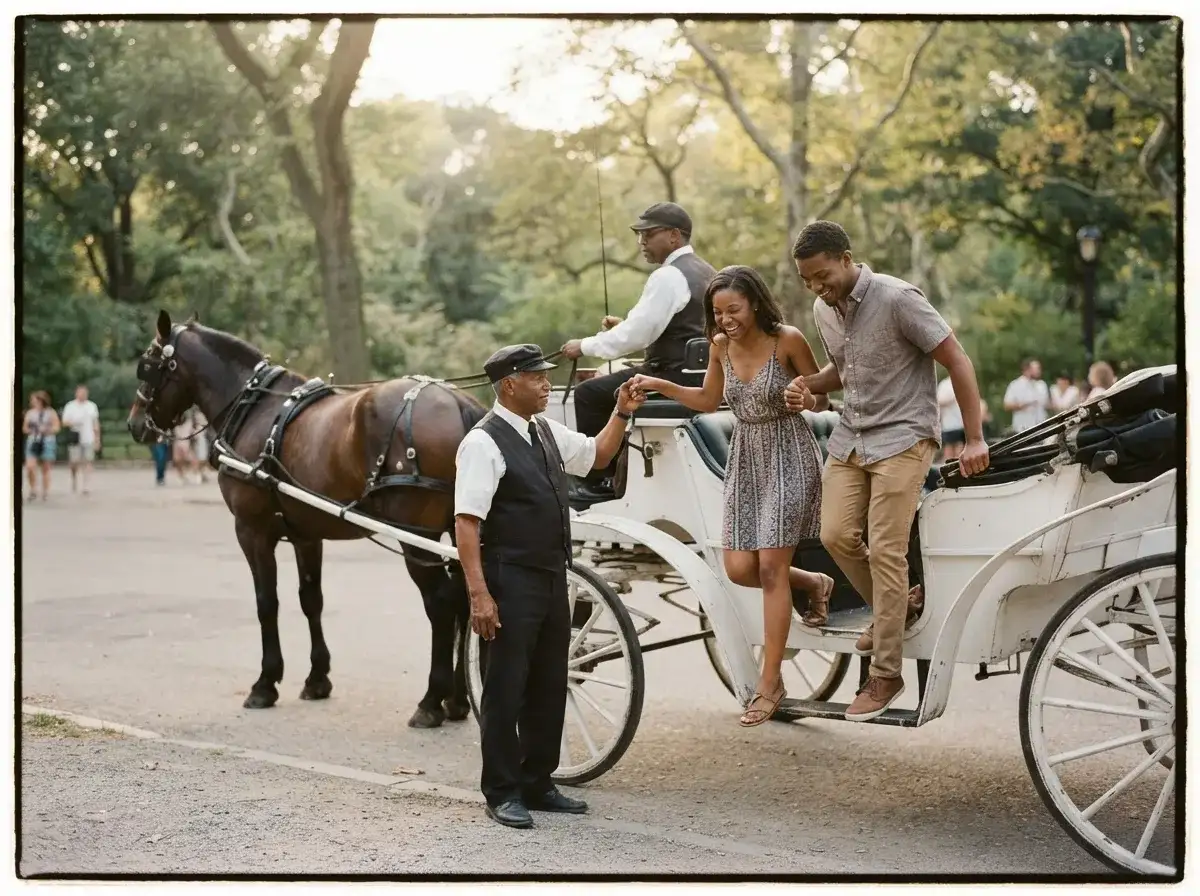
Is a horse-drawn carriage cruel? Not by nature, but it can be. A carriage ride is humane when the horse is suited to the work, well fed and rested, given water and shade, and worked within clear limits by a trained driver. It becomes unfair when horses are overworked or overheated. The care behind the carriage is what matters.
Many people planning a wedding or a birthday ask this question first, and it deserves a straight answer rather than a sales pitch.
This post explains what responsible carriage operation looks like, where the concerns come from, and how to judge any company, including AJ Carriage.
Is a horse-drawn carriage cruel in every case?
No. Blanket answers miss what matters.
Horses have worked alongside people for a very long time, and draft breeds were developed to pull. For a fit, trained horse, pulling a light carriage at a walk is a normal day’s work, much like a trail ride or a farm task is for other horses.
That does not mean every carriage ride is fine. A horse can be worked too many hours, sent out in dangerous heat, hitched to a poorly fitted harness, or handled by someone who does not understand horses. In those cases the concern is fully justified.
So the honest answer is that the carriage is not the problem. The standard of care is. The rest of this post helps you tell the two apart.
Why are draft horses suited to pulling a carriage?
Draft horses such as Percherons are large, calm, and built for steady pulling rather than speed. Their size is not for show. It means a carriage with a few passengers is a modest load for them, especially on wheels and level ground.
A well-fitted harness spreads the load across the chest and shoulders so the horse pushes into the collar rather than straining at any one point. Poorly fitted tack does the opposite, causing rubs and soreness, which is why fit matters as much as the horse’s strength.
Temperament matters, too. A carriage horse meets traffic, music, crowds, and flash photography. A horse chosen for a gentle, steady nature handles those moments with less stress than a nervous one. That is why breed and disposition are part of responsible operation, not just appearance.
What does responsible carriage operation look like?
Good care happens mostly out of sight, on the days when nobody is booking a ride. Here is what it includes.
- Rest. Set working hours, breaks between rides, and days off with turnout.
- Water and feed. Water available before and after work, and a diet matched to the horse’s workload.
- Shade and shelter. A place out of the sun while waiting, and a proper barn at home.
- Hoof care. Regular farrier visits, with shoes suited to pavement.
- Weight limits. A firm passenger cap, sized to the horse and the carriage.
- Weather pauses. Clear rules for heat, cold, ice, and storms, and the willingness to stop.
- Trained handlers. Drivers who know the horse, read its mood, and keep the scene calm.
- Veterinary care. Routine checks and quick attention to anything off.
None of this is glamorous, and that is the point. An operator who talks about these things easily is showing you the part of the business that protects the horse.
Where do concerns about carriage horses come from?
Some concern is instinctive. People see a large animal in harness on pavement and worry. That reaction is fair and worth respecting.
Other concern comes from real cases. Stories of exhausted horses, heavy urban traffic, heat stress, or neglect have shaped how many people view carriage rides. When someone asks whether a horse-drawn carriage is cruel, they are usually thinking of those cases.
A polished carriage and a pretty horse do not settle the question on their own. Appearance is easy. Care is harder to see, which is why the useful question is how a company treats its horses when no one is watching.
There is also a difference between a nonstop street operation and a planned event ride. A private wedding entrance or a birthday ride is short, scheduled, and supervised. The horse works for a set window and goes home. Planned rides are easier to manage well, though they still depend on the operator doing the work.
How can you judge any carriage operator?
You do not need to be a horse expert. Ask plain questions and watch how the answers come. Then use your eyes on the day.
- How many hours does a horse work in a day, and how many days a week?
- What happens in high heat, ice, or a storm? Who decides to stop?
- How often do the horses see a farrier and a veterinarian?
- Where do the horses live and rest between rides?
- What is the passenger limit, and why?
- How long has the driver worked with this horse?
A responsible operator answers without defensiveness. If the horse sounds like an afterthought, keep looking.
On the day, look for a settled horse: quiet stance, clean coat, healthy weight, even movement. Look for a calm driver who does not rush, yank, or shout. Look for a team that adjusts the plan when conditions change instead of pushing through. Those are signs the checklist above is being followed, not just recited.
How does AJ Carriage care for its horses?
Plain facts are more useful than big claims. Here is what AJ Carriage can tell you, and what you can check for yourself.
The horses are primarily white Percheron draft horses, chosen for a gentle temperament. Percherons are a classic driving breed, calm in busy settings, and well suited to a carriage at a walking pace.
The carriages seat up to six passengers, including children. That cap is part of how the load stays sensible for the horse. You can see the horses and carriages before you decide.
The team watches the forecast in the days before a ride and works with you to reschedule or adjust the route. Unsafe conditions pause the ride until they improve, even in the middle of an event. Drivers are professionally uniformed and manage the horse and the scene at pickup and drop-off.
If you have a question this post does not answer, write to [email protected] and ask. The frequently asked questions page covers weather, seating, and booking, and the same welcome applies to questions about the horses.
What is the better question to ask?
Rather than asking whether carriage rides are cruel in general, ask whether a specific company deserves your trust. Welfare is shaped by daily choices: feeding, turnout, hoof care, workload, route, and weather judgment.
When those choices are made well, guests can feel it. The horse stands calmly, the driver is unhurried, and the pace is steady. The ride carries a dignity that matches the occasion, whether it is a wedding entrance or a quiet birthday ride.
You do not have to choose between a meaningful moment and your values. You only have to ask good questions and book thoughtfully.
If you would like to talk through a date and ask about the horses first, the reservations page is the place to start. Questions are welcome.
Frequently asked questions
Is pulling a carriage hard on a horse?
For a fit draft horse with a properly fitted harness, pulling a wheeled carriage on level ground is work the breed was developed for. It becomes hard when the load is too heavy, the hours are too long, the footing is poor, or the weather is extreme. Care and limits make the difference.
What questions should you ask a carriage company about horse welfare?
Ask how many hours a horse works in a day, what happens in heat or storms, how often the horses see a farrier and a vet, where they rest between rides, and what the passenger limit is. A responsible operator answers plainly and without getting defensive.
How does AJ Carriage look after its horses?
The horses are primarily white Percheron draft horses, chosen for a gentle temperament. Carriages seat up to six passengers, including children. The team watches the forecast and pauses the ride in unsafe conditions until they improve. Questions are welcome at [email protected].
Can you tell if a carriage horse is well cared for by looking?
You can read some signs. A settled horse stands quietly, has a clean coat and healthy weight, and moves evenly. A calm, unhurried driver is another good sign. You are not expected to make a veterinary judgment from a glance, so pair what you see with the answers you get.